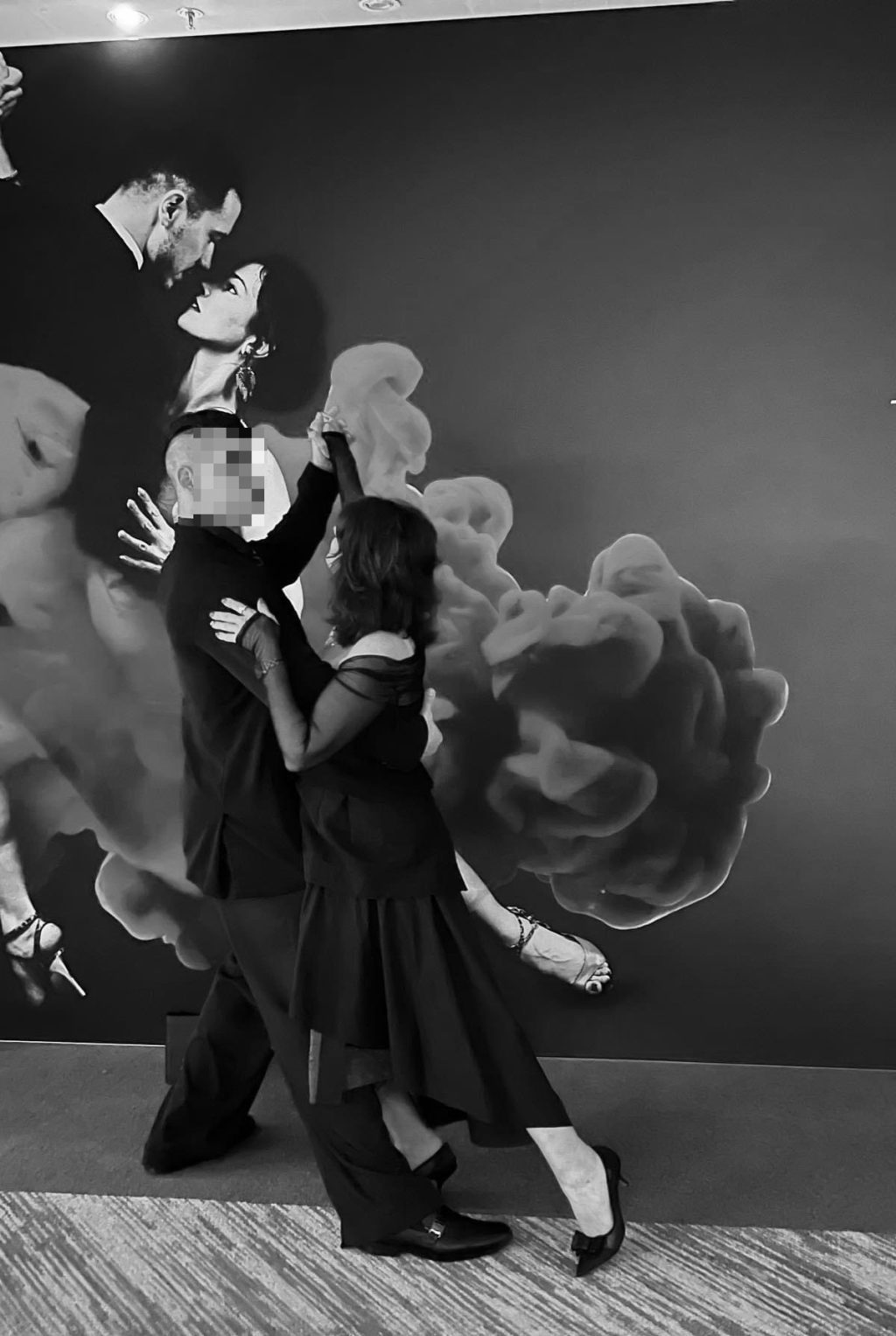
I don’t just dance, I perform, I breathe, I watch the world disappear I release my feelings I lead with my heart I tear down my walls I stop feeling sad I lose the pain I let go I smile No I don’t just dance I do so much more.
-Valerie Cheers Brown
I was standing in our bedroom.
My husband, who towered over me, was so close I could feel the heat of his anger radiating from his body. His face was red, his voice raised, his tone filled with a rage that, to this day, I still cannot fully describe.
I don’t even remember what triggered it — whatever small thing I had supposedly said or done. I couldn’t recall it. It didn’t fit with who I knew myself to be. And yet, standing there under the weight of his words, his certainty, and his anger, I believed him.
After all, he was smart. He had a good memory. I must be wrong.
I backed up slowly until I felt the hard, cold wall against my spine. There was nowhere else to go. I kept my voice calm, careful not to wake the children. I said quietly, “I don’t remember doing that.”
That only made it worse.
His rage escalated. He raised his fist — so fast I barely had time to flinch — and slammed it into the wall inches from my face. The drywall cracked around his knuckles. I didn’t scream. I didn’t move. I just stood there frozen, watching him pull his hand from the hole.
I remember thinking:
“If he ever actually hits me, I will leave. I will call the police.”
What I didn’t know then was that I didn’t need to wait for anything more. This was already abuse.
When I look back on those years — the years of emotional neglect, manipulation, and confusion — it’s like staring into a fog. So much is missing, blurred, as if my brain tucked it all away to survive.
I functioned somehow. I worked, I took care of my children, I smiled for photos. And yet, when I look at pictures from that time, I feel like I’m peering into someone else’s life.
I wonder: Was any of it real?
The lies were so subtle, the re-writing of memories so constant, that eventually, I didn’t trust my own mind.
He would accuse me of things — words I supposedly said, actions I supposedly took — and I would rack my brain, desperate to remember, desperate to defend myself. But after years of this, I simply accepted it:
“I must have a terrible memory. I must be wrong.”
Even more painful, he saw malice where there was only love.
Every mistake, every forgotten detail, every moment of independence was twisted into proof that I was selfish, arrogant, and trying to hurt him.
Nothing could have been farther from the truth.
From the outside, we looked perfect.
Inside, behind closed doors, it was a slow erosion of self — a kind of abuse that leaves no bruises but shatters you just the same.
If any part of this feels familiar to you, know you are not alone.
- Nearly half (48%) of women and almost one-third (30%) of men have experienced psychological aggression by an intimate partner in their lifetime. (CDC, National Intimate Partner and Sexual Violence Survey)
- Emotional abuse often escalates gradually, and survivors frequently doubt their own memories and judgment.
- Those in relationships with individuals with untreated borderline personality disorder may experience intense cycles of idealization and devaluation, making it even harder to recognize patterns of emotional harm.
You do not have to wait for a punch to know something is wrong. Your feelings are real. Your memories matter. And you deserve peace.
If you’ve ever stood frozen in a moment you barely understood — heart pounding, mind doubting your own memory — please know: you are not alone.
Emotional abuse thrives in silence. Healing begins the moment we start to tell the truth.
Thank you for sharing this first step of my journey with me.
If any part of this resonated with you, I invite you to stay connected. I’ll be sharing stories, reflections, and the quiet, steady work of healing — one honest word at a time.
Subscribe below to walk this path with me.
Or, if you feel called, leave a comment below — your voice is safe here.


 Finding My Rhythm: Healing, Leading, Becoming
Leave a reply to Gam Messy Cancel reply