Confidence is often spoken about as something leaders either have or don’t. But rarely do we talk about how its absence can quietly undermine even the most capable leaders.
I know this because I lived it.
Learning to lead with shaking hands
My training as a urologist followed the old, unforgiving model: see one, do one, teach one. On paper, it sounds efficient. In reality, it is terrifying.
There were countless moments when my hands were steady on the outside and shaking on the inside. I was acutely aware that any mistake could cause real harm to a patient. I lived in a near-constant state of anxiety, driven by the weight of responsibility and the fear of failure.
In that culture, praise was rare and often wrapped in barbs. Compliments, if they came at all, were backhanded. Mistakes, however, were not only acknowledged, they were publicly dissected. Errors were reviewed openly. Reprimands were public. Silence followed success.
I was never told I was good at my job.
Years later, my mentor finally said something that stopped me in my tracks. He told me he would never have selected me as his trainee if I wasn’t gifted. I remember feeling stunned. I had spent years hoping he might one day say I had good hands. He explained that this was implicit in his choosing me.
What was understood by him was never felt by me.
When confidence erodes, even competence suffers
At home, emotional abuse compounded this internal erosion. I was constantly made to feel not good enough, always striving, always chasing an ever-moving standard. Over time, that voice became my own.
The lack of confidence began to undermine my growth as a surgeon. When patients died, even when the circumstances were beyond my control, I carried it as personal failure. I focused on what went wrong rather than the countless things that went right. My successes faded into the background; my perceived failures took center stage.
Later, as I transitioned into leadership, this pattern followed me. I began to see myself as the victim of circumstances rather than the owner of my abilities. Imposter syndrome took hold. I questioned whether I belonged at the table at all.
I had the skills. I had the experience.
But I did not have the confidence to trust them.
Finding confidence on the dance floor
Dance was never meant to be the answer.
And yet, it was.
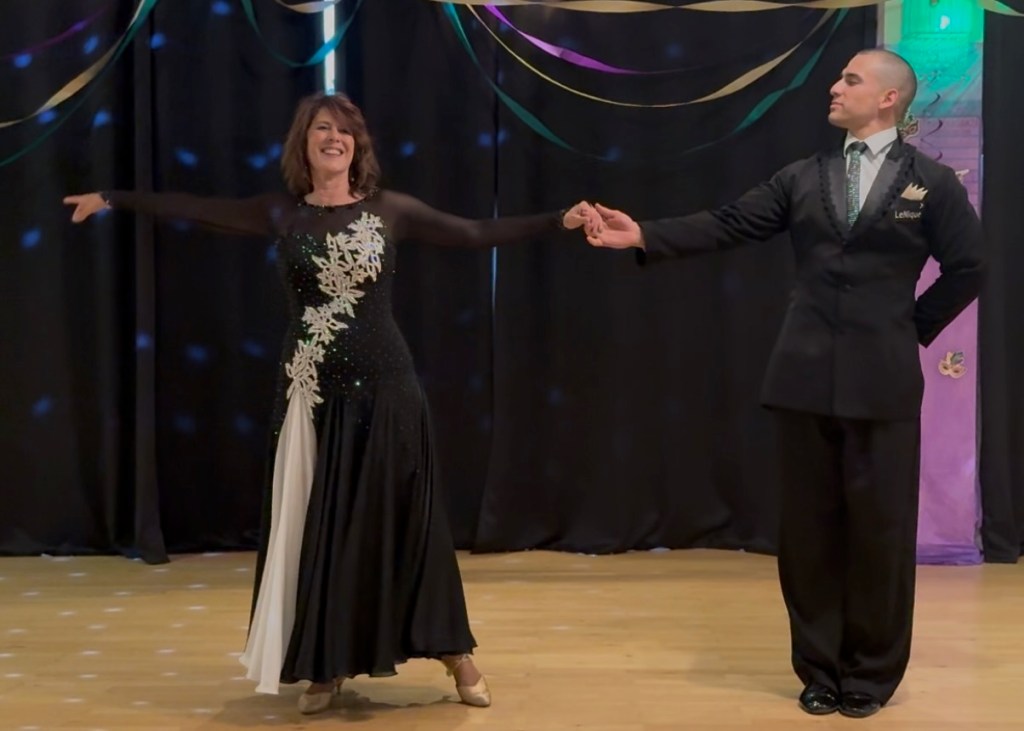
When I began to dance, something shifted. Dance demanded posture before words. Presence before explanation. It taught me to lift my head and open my shoulders when I entered a room. To take up space. To lead and to follow with intention.
On the dance floor, I learned to trust my instincts again. I learned that precision and expression could coexist. I learned to feel the music and allow it to guide me, rather than second-guess every step.
And then something surprising happened.
People began to admire what I had been criticizing.
They told me they wished they could dance the way I did.
It was disorienting at first. I realized I had been looking at myself through a distorted mirror. Not just in dance, but in leadership and in life. What I believed was weakness was often grace. What I saw as imperfection, others saw as skill.
Confidence changes everything
Dance gave me back something I had lost long before I realized it was gone: confidence rooted in embodiment and trust.
As that confidence grew, things began to align. I stopped shrinking. I stopped apologizing for my presence. I began to own what I brought into a room.
I finally saw the truth clearly:
I had the skills.
I had the focus.
I had the passion.
I had the integrity.
What I lacked was confidence, and its absence had been holding me down.
With confidence came clarity. With clarity came leadership that felt natural rather than forced. I was no longer performing leadership. I was inhabiting it.
Leadership, like dance, must be felt
Dance also taught me something essential about leadership. Technique alone is not enough. Leadership, like dance, must connect emotionally. It must tell a story. It must move people.
People don’t follow leaders because of perfect execution. They follow leaders because they feel something. Safety. Purpose. Belonging.
Confidence allows that connection. Without it, even the most skilled leader cannot fully lead.
Becoming who I was always meant to be
I am still learning. Still refining. Still listening.
But now I know this: confidence is not arrogance. It is permission to stand fully in who you already are. When confidence and humility move together, leadership becomes less about proving and more about presence.
Dance gave me that lesson.
And in doing so, it helped me become the leader I was always meant to be.
 Finding My Rhythm: Healing, Leading, Becoming
Leave a comment