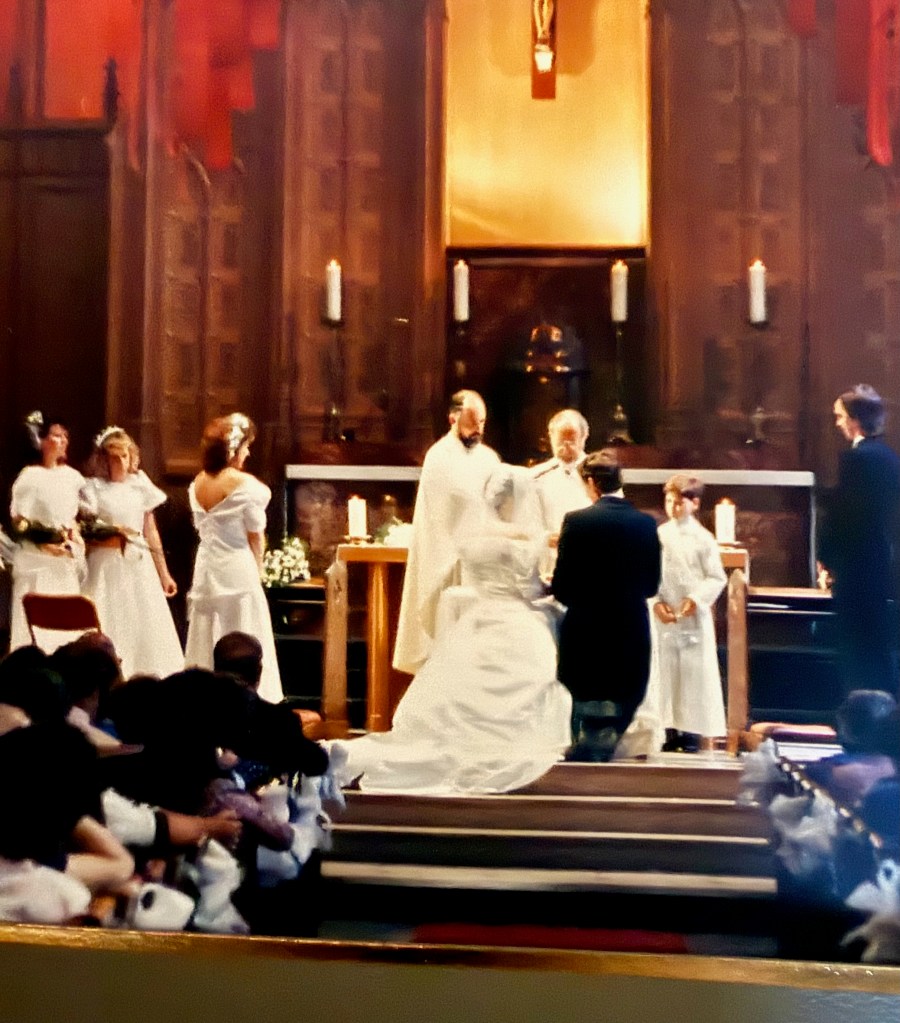
There is a box of photographs I avoid.
Not because I don’t love what’s in them.
But because I love it too much, and it hurts too deeply to look.
Family photos are supposed to feel like anchors. Proof of joy. Evidence of love. A visual record of a life well lived. But for me, they feel like witnesses to something else. A story I believed in for years. A story that, when I look back now, feels painfully untrue.
When I finally do open that box or scroll through old albums, I feel a strange double ache. First, the grief of not remembering. So many moments I can’t fully recall. Birthdays, holidays, vacations. They exist in pictures, but not always in my body. Trauma has a way of stealing memory, even when life looks beautiful on the outside.
And then comes the second ache.
The betrayal.
Because what I thought was love… wasn’t.
He never loved me in the way love is meant to be given. Not because I wasn’t worthy, but because he was not capable of loving that way. Real love requires safety. It requires respect. It requires the ability to see another human being as whole. Looking at those photos now, I see a woman smiling inside a story that never truly existed.
It makes me think about social media. About how easily we curate happiness. How often we scroll past images of perfect families and assume the picture tells the truth. We forget that photographs capture posture, not pain. They freeze smiles, not the silence behind closed doors.
People used to think we were the ideal family.
Two successful career parents.
Four beautiful children.
A lovely home.
European vacations.
Church on Sundays.
Picture perfect.
And yet, none of it was real in the way that mattered.
That doesn’t mean my children weren’t real joy. They were and are the truest love of my life. But even that love now feels tangled in grief, because I want so badly to look back and celebrate their childhoods with lightness. I want to relive the sweetness. Instead, I find myself swallowed by the knowledge of what was happening beneath the surface.
I want to remember their laughter without also remembering my fear.
I want to see their smiles without also seeing my silence.
And sometimes, I just can’t.
This is why I struggle to watch our wedding video. My children have asked over the years, curious, innocent, wanting to see the beginning of their family story. I never could bring myself to press play. I didn’t have the language then to explain why. I just knew my body wouldn’t let me.
Even while I was still married, I couldn’t watch it.
Now I think I understand.
Some part of me already knew.
Some quiet, buried wisdom recognized that what looked like love on film was not love in real life. That what felt like celebration was actually the opening scene of a long performance. And I was tired of pretending, even when I didn’t yet know I was pretending.
There is a particular loneliness in realizing that the life everyone admired was a life you were surviving. That the marriage people envied was one you were enduring. That the story people believed was never the story you lived.
And yet.
I am learning something new now.
I am learning that it is okay to grieve photographs.
It is okay to mourn memories that feel contaminated by truth.
It is okay to love your children fiercely and still ache for the version of motherhood you deserved to experience in safety.
And it is okay to finally say this out loud.
Pictures can lie.
Appearances can deceive.
And sometimes the bravest thing we do is admit that what looked beautiful was never real.
Not because we failed.
But because we were living inside a story that was written by someone who could not love.
What the science says about memory, trauma, and emotional betrayal
Psychological research helps explain why looking at photos can feel so painful for survivors of emotional abuse.
Studies in trauma psychology show that chronic emotional abuse alters memory processing. When the brain is in a prolonged state of stress, the hippocampus, the area responsible for forming coherent memories, does not store experiences in the usual narrative way. Instead, memories become fragmented, blurred, or emotionally detached. This is why many survivors struggle to recall large portions of life that looked “happy” from the outside.
Research from the National Institute of Mental Health and the American Psychological Association also shows that betrayal trauma, abuse by someone you depend on, creates a unique kind of psychological injury. The mind protects itself by suppressing awareness, which can later surface as confusion, grief, and shock when survivors finally see the truth clearly.
And then there is the phenomenon of cognitive dissonance. When reality and appearance conflict for too long, the brain chooses survival. Many survivors report that long before they could articulate what was wrong, their bodies already knew. Avoiding wedding videos. Avoiding photographs. Avoiding certain memories without knowing why.
These are not signs of weakness.
They are signs of adaptation.
The hopeful part is this.
Healing changes memory too.
Neuroscience shows that as safety returns, the brain begins to integrate experiences differently. Survivors move from surviving their past to understanding it. From confusion to clarity. From self-doubt to self-trust.
And with that comes a new kind of remembering.
Not remembering the illusion.
But remembering the truth.
And finally, finally, trusting yourself enough to believe it.
 Finding My Rhythm: Healing, Leading, Becoming
Leave a comment