Leaving, Returning, and Learning to Recognize Emotional Abuse
Leaving wasn’t the hard part.
Not really.
The hard part came later—when the fog cleared, when the survival mode wore off, when the questions started whispering in the silence. Why did I stay that long? Why did I make myself so small? Why couldn’t I see it for what it was?
I left my marriage years ago. I walked away from a home built on control, manipulation, and slow-burning emotional abuse. But I didn’t call it that then. Abuse was a strong word. My mind flinched from it. He never hit me. He never screamed. He didn’t need to.
He made me doubt myself—quietly, steadily, consistently. He taught me to apologize for things I didn’t do. To walk on eggshells. To bend so far backward I nearly snapped. And by the time I left, I thought I was the one who had failed. Not as a partner, but as a person.
It wasn’t until years and countless therapy sessions later that I started to understand: I hadn’t just been in a bad marriage—I had been groomed into emotional dependency. Into doubting my instincts. Into staying quiet when I should have screamed. Into believing that if I was just better, smarter, kinder, more understanding, everything would be okay.
Healing has been messy.
Empowering, yes—but messy.
There’s no linear timeline for unlearning abuse. No magic moment where you stop second-guessing your gut or suddenly master the art of speaking up in real time. There are victories, yes. But also relapses. Shadows that look like comfort. Patterns that resurface in unexpected ways.
That’s how I found myself tangled up in something that looked so different, yet felt so familiar.
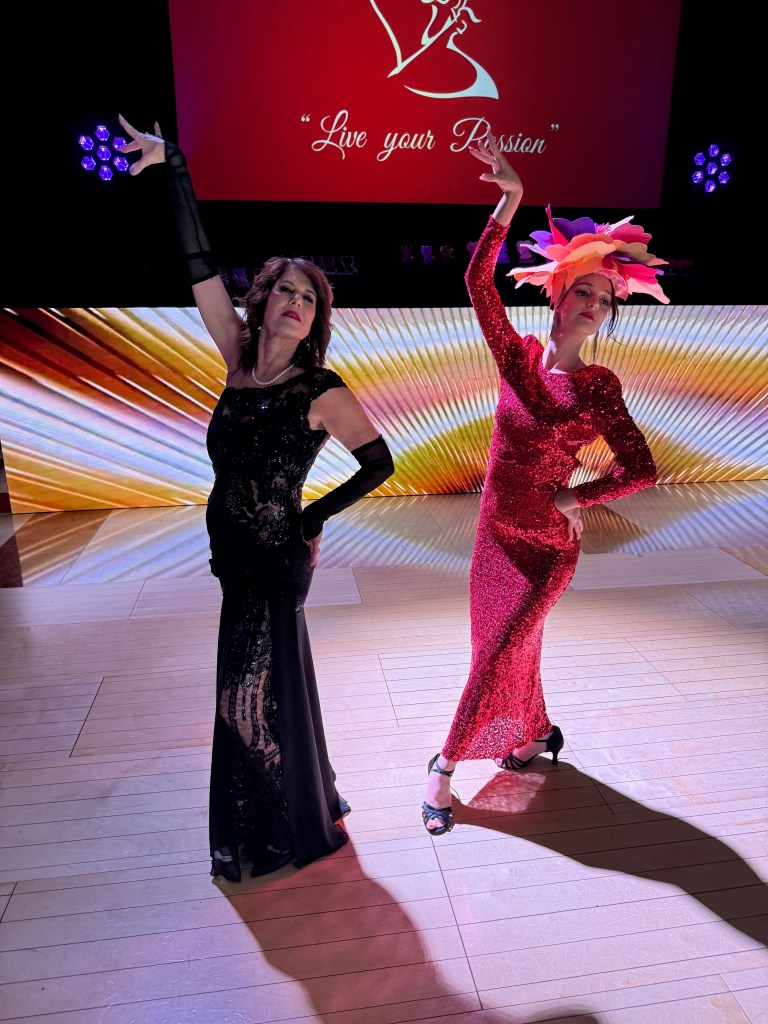
My dance instructor was nothing like my ex-husband—on the surface.
Young, enthusiastic, full of energy and fun. He made me laugh. He challenged me intellectually. He had that intoxicating mix of passion and unpredictability. He wasn’t abusive in the way I had come to define it. But there were signs—small, slippery moments—that triggered something in my nervous system. That feeling in my gut. That tightening in my chest.
He forgot key details, made last-minute decisions, created choreography on sticky notes that would inevitably be lost. When things went wrong, it often became my responsibility to fix them. And when I brought things up, they were brushed off. Or worse, I felt like the difficult one for naming the problem.
He wasn’t malicious. I never believed he was. But he was disorganized, immature, and unable—or unwilling—to meet the standard I needed, especially as someone paying for a professional experience. Still, I kept coming back. Despite better options. Despite knowing the toll it took on me.
Why?
Because dysfunction is magnetic when it’s familiar.
Because part of me still believes I need to fix situations instead of just walking away from them.
Because being undervalued feels like home when that’s what you were trained to expect.
And because healing isn’t just about seeing the red flags—it’s about building the strength to respond to them. To believe yourself. To act on that belief quickly, without needing the situation to become unbearable first.
I’m still learning.
Still freezing sometimes when I should speak.
Still giving too much grace when I should be giving boundaries.
Still untangling the lie that says if only I were better, they would treat me better.
But I’m closer than I’ve ever been.
And I know this: this ends with me.
This pattern—of tolerating mistreatment, of shrinking to stay safe, of prioritizing others’ comfort over my own dignity—has existed in my family for generations. Passed down like an heirloom.
It stops here.
I’m not just healing for me. I’m healing for the women who came before me, and for anyone who may come after. Because cycles only break when someone has the courage to name them and walk away—even when it’s hard. Especially when it’s hard.
The Cycle of Emotional Abuse: What the Research Says
- Emotional abuse often goes unrecognized and unreported. Unlike physical abuse, it leaves no visible scars—but the psychological wounds can be just as deep. According to the National Coalition Against Domestic Violence, 48.4% of women and 48.8% of men have experienced at least one psychologically aggressive behavior by an intimate partner in their lifetime.
- Survivors of emotional abuse often repeat patterns—gravitating toward similar relationships even after leaving abusive ones. Studies suggest that early exposure to abuse can normalize dysfunctional behavior and shape attachment patterns, making it difficult to recognize and exit unhealthy dynamics later in life.
- The intergenerational transmission of trauma is real. According to the American Psychological Association, children who grow up in abusive or neglectful environments are more likely to experience or perpetrate abuse in adulthood, continuing the cycle unless there is significant intervention and healing.
- Breaking the cycle requires more than awareness. It requires education, support systems, therapy, and most of all, self-compassion. Survivors often blame themselves for staying too long or not seeing it sooner—but healing is not linear, and no one should be shamed for how long it takes to reclaim their voice.
If you recognize yourself in any of this, know this: you are not broken. You are healing.
And healing is brave.
Even when it’s slow.
Even when it doesn’t look like progress to anyone else.
Even when you return to the same place a few times before finally walking away for good
 Finding My Rhythm: Healing, Leading, Becoming
Leave a comment