
Vulnerability—something I had spent most of my life avoiding—found me on the dance floor. But not the kind of vulnerability that leaves you exposed to harm. This was something different. This was the courage to be seen, to be held, to move through space with nothing but trust between you and another person. This was the kind of vulnerability that heals.
And it began, unexpectedly, with tango.
For most of my life, I never considered myself a dancer. I was the wallflower in high school, hovering at the edges of the dance floor, secretly wishing to be asked, and secretly terrified I would be. When I did try, my limbs locked up—awkward, unsure, convinced I had no rhythm. I buried that part of myself early, told myself I wasn’t made for movement, for music, for that kind of joy.
Years later, after surviving emotional abuse and doing the deep, painful work of recovery through therapy, I still felt stuck. Therapy had helped me understand the trauma, begin to reclaim my voice, and rebuild my fractured sense of self. But there was a piece of me I still couldn’t access. A part still frozen. Still afraid.
Then I remembered Argentina.
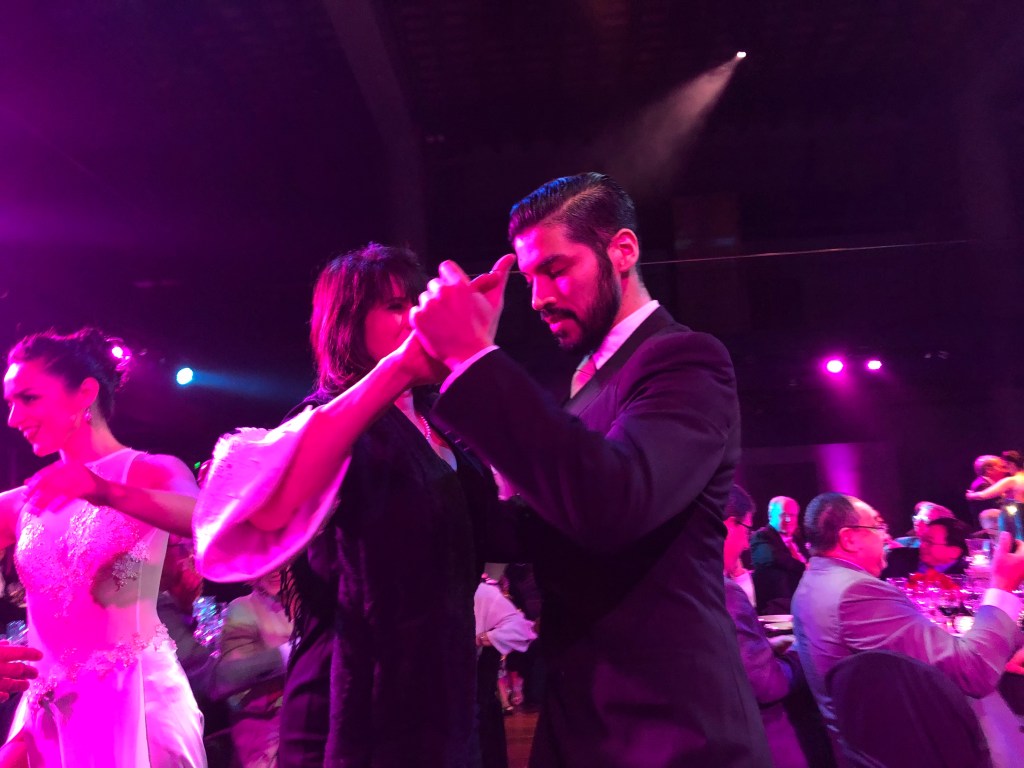
A few years earlier, I had taken a spontaneous tango lesson while visiting Buenos Aires. Just one. It was a tourist experience—a lark, I thought at the time. But during a gala that evening, one of the instructors extended his hand and invited me to dance. I hesitated. And then something remarkable happened: my body remembered. As he led me into a simple sequence we’d practiced earlier, my feet responded before my brain could catch up. I wasn’t thinking. I was feeling. The music wrapped around us, and I moved with a grace I didn’t know I possessed. For a fleeting moment, I wasn’t self-conscious. I wasn’t tense. I was free.
And people noticed.
“You looked like you were born to dance,” someone said. I laughed it off—but I never forgot that feeling. I had tapped into something deeply human, deeply mine. A whisper of something long dormant had stirred.
Years later, desperate to reconnect with that whisper, I walked into a ballroom studio. I told the instructor I wanted to learn Argentine tango. I wasn’t entirely sure why. I didn’t know what made it different from other dances. But I knew it had touched something in me that I hadn’t been able to access any other way.
What I found was not just a dance—it was a dialogue. Tango is a conversation without words. A language of weight shifts, pauses, embraces. It requires presence. It demands trust. And it offers connection—not just with your partner, but with yourself.
From the first moment I stepped into the embrace of my instructor, I felt something shift. His lead was not forceful. It was gentle—a suggestion, not a command. And I let go. I closed my eyes. I followed.
This wasn’t about submission. It was about surrender. It was about believing I could be guided, that I didn’t always have to be in control. For the first time in my life, I wasn’t trying to prove anything. I wasn’t analyzing, performing, perfecting. I was simply there. Fully present.
And in that space—between the notes, between the steps—I began to feel whole.
Tango became a mirror. It showed me where I was holding tension, where I was afraid to let go. It exposed my hesitations and invited me to dance with them. Each session was its own quiet revolution. I stopped apologizing for taking up space. I stopped hiding. I began to trust my body, to forgive it, to celebrate it.
With each dance, I reclaimed a part of myself that had been lost to silence and shame.
Vulnerability, I’ve learned, is not weakness. It is presence. It is the willingness to be moved—by music, by memory, by another human being. It is the decision to show up exactly as you are, and to believe that’s enough.
And for me, it started with a single dance.

 Finding My Rhythm: Healing, Leading, Becoming
Leave a comment