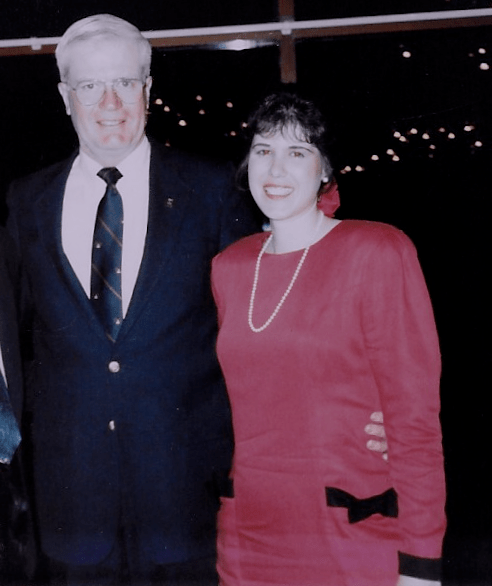
I never rotated on general urology as a medical student.
Most people exploring urology start with the basics—stones, BPH, voiding dysfunction. But my path was different. The only urology rotation I took was in urologic oncology, and it was with the Chair of one of the most prestigious programs in the country.
I was drawn to the complexity, the high stakes, and the surgical precision of cancer care. I didn’t know it at the time, but I had stumbled into a subspecialty that would ultimately become my calling.
After that rotation, the Chair encouraged me to take additional electives in urologic oncology—but not just anywhere. He suggested I rotate with other leaders in the field, many of whom he had trained himself. His message was clear: see how others practice, explore different styles, and decide not just what you want to do—but who you want to become.
I followed his advice and rotated at several top institutions. But none of them challenged or inspired me like he did. His expectations were sky-high, but so was his standard of excellence. I would stand in the OR, just watching, asking questions when I could. The other attendings were all skilled surgeons, but none had his finesse. With him, the operation felt like a choreographed routine—each step perfectly executed, no wasted motion. He didn’t just teach medicine—he shaped surgeons.
I came back to him and said, simply, “I want to train under you.”
He didn’t mince words.
“Urology is actually very boring,” he said, almost as a warning. “If you want to do what I do, you’ll have to go through six years of general urology. And only then, if your hands are good enough, you might have the chance to subspecialize in urologic oncology.”
He was known to select only residents he had personally trained. It was rare to see a Fellow from outside his program—he wanted to be sure his Fellows had the technical skill to do what he did. This wasn’t something every surgeon possessed. You could be good, but for his Fellowship, you had to be better than good. It was one of the most competitive programs in the country and an honor to be selected.
I didn’t truly understand that at the time. I naively assumed that with hard work, I could be selected. I was willing to bank on myself. I didn’t yet realize that it would take both hard work and skill. God gave me that skill. But there was no way I could have known that then.
It was sobering. Six years of training in a field I hadn’t technically explored. No guarantees. No shortcuts. Just the possibility—if my hands were skilled enough.
 Finding My Rhythm: Healing, Leading, Becoming
Leave a comment