All my life, I have been in motion—driven, determined, always striving. From the outside, it might look like ambition. But the engine behind my momentum was not ego or achievement for its own sake. It was longing. A deep, hollow ache to be seen. To be worthy. To be enough.
I grew up trying to earn love that never came. My father was emotionally absent, distant in ways that silenced me before I had the words to understand why. I became the overachiever, the perfectionist—the child who did everything right, hoping that maybe, just maybe, excellence could unlock affection.
I didn’t want to be impressive. I wanted to be loved.
Medicine became my lighthouse. From a young age, I clung to the dream of becoming a doctor. It wasn’t just a profession—it was proof. That I was smart enough. Strong enough. Worthy enough. That I mattered.
My mother, who went back to school while working nights, showed me what was possible. We mapped out the path—middle school, high school, college, med school. I followed it with everything I had.
In college, I worked 30 hours a week and still finished in three years. But I struggled. My first chemistry course was a disaster. I got a C and felt like a fraud. When things came easily—like sociology—I ran from them. I didn’t trust ease. I trusted effort. I believed struggle made it real.
When the rejections came from med schools, I internalized them as confirmation: not good enough. But I didn’t give up. I worked as a medical technician and applied again. This time, I got in.
Walking into medical school felt like entering sacred ground. I was finally where I’d fought so hard to be. But the system didn’t feel sacred. It felt crushing.
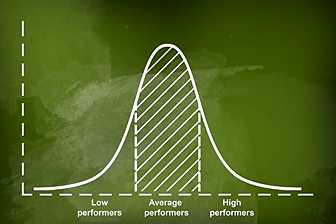
The information came like a firehose—nonstop, unrelenting. There was no way to master it all. No pause for understanding. Just memorize, survive, perform. I studied harder than I ever had, pouring everything into that first test. When the scores came back, I had only answered 30% of the questions correctly.
I was devastated. I thought I had failed. I thought it was over.
Then the grades were released. That 30%? It was the highest score in the class.
I stared at the screen in disbelief. Relief and confusion flooded me. How could that be?
That was the moment I realized: the system was never designed to make us feel enough. It was built to keep us chasing, doubting, comparing. In medical school, the bar is always just out of reach. No matter how much you know, it never feels like enough—because one missed detail could mean a missed diagnosis. One wrong step, and a life could hang in the balance.
And so we live in fear. In silence. In shame. Even when we’re succeeding, we feel like we’re failing.
That test didn’t just measure knowledge—it measured survival. And for the first time, I saw that I wasn’t broken. The system was.
But I wouldn’t fully understand that truth for many years. At the time, all I knew was that I needed to work harder, do more, be better. I internalized the message that perfection was the only way to be worthy. The culture didn’t just challenge me—it chipped away at me, feeding my self-doubt, reinforcing the belief that no matter how much I achieved, it would never be enough.
This is not a healthy culture. It rewards burnout, masks vulnerability, and conditions us to tie our value to constant striving.
Still, I became a doctor. Not because I needed to prove myself—but because I truly believed it was a calling. I believed God had a plan for my life, and this was it. Even in the moments when it felt too hard, too lonely, too unforgiving, I held onto that sense of purpose. Medicine wasn’t just a career. It was my path. My offering. My way of serving something greater than myself.
And now, years later, I’m learning that I don’t have to be perfect to live that calling.
I just have to be present.
Compassionate.
Human.
 Finding My Rhythm: Healing, Leading, Becoming
Leave a comment