I did not choose this journey—neither the one through a high-conflict divorce nor the one through a surgical career in a male-dominated field. But both shaped me. Both tested me. And both—ironically—made me who I am: a woman who knows her worth, her voice, and her power.
What started as an amicable divorce quickly unraveled into something far more insidious. I learned—slowly and painfully—that the person I had built a life with was not who he appeared to be. The mask came off, and beneath it was manipulation, deceit, and control. I was forced to see not only who he really was, but how broken the system around us truly is.
The judicial system is not built for women like me—for mothers fleeing emotional abuse masked as conflict. It assumes equality, balance, neutrality. That both parties come with good intentions. That mediation is fair. That “he said, she said” lies somewhere in the middle. But abuse doesn’t work like that. The louder voice dominates. The manipulator twists facts. And the system—blindfolded—calls it even.
I was dragged into a lion’s den again and again. Asked if I’d ever been afraid, only to have that truth ignored. Given court orders that meant nothing—because when he violated them, no one enforced them. My only weapon was documentation. I filed report after report while he took our child in defiance of those orders. Each time, I was told to take it back to court—at my expense, with no guarantees. I was retraumatized by the very structures meant to protect me.
Even my attorneys, well-meaning as they were, did not understand what “high conflict” truly meant. They treated my case like any other. And by the time they saw the truth, it was too late. Decisions had already been made. The damage already done.
Eventually, I did the only thing left—I moved. It brought breathing room, structure, and some peace. And in that space, I began to heal.
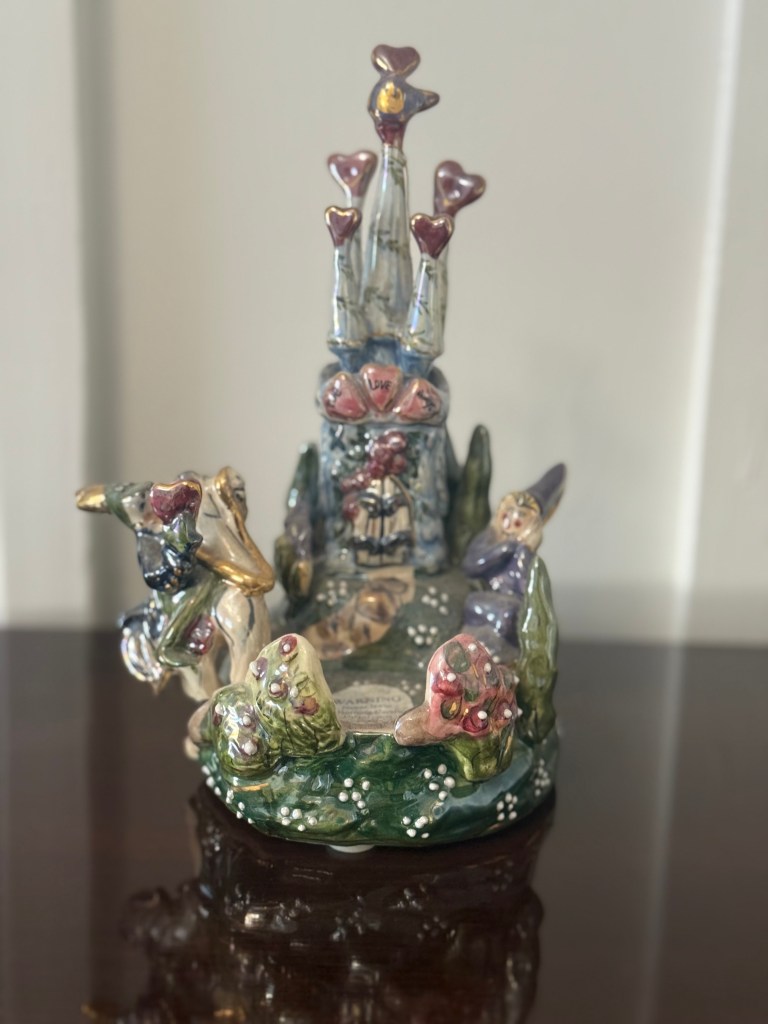
Therapy became a lifeline. But it was a book by Marcis Grad, The Princess Who Believed in Fairy Tales1, that offered something deeper: validation. It mirrored my pain, my disillusionment, and the slow reclamation of truth. I journeyed, like the Princess, through the Sea of Emotions and the Valley of Perfection to the Temple of Truth. There, I found the sacred scroll: self-love.
Only when I began to love myself could I believe in a new kind of ending. Maybe it wouldn’t have a prince. But it would have joy. Respect. Peace. And above all—me.
It was during this time of healing that I began to reflect on another environment that had quietly echoed the same painful patterns: medicine.
I love being a physician. It is a sacred calling. But it has also been an arena of quiet wounds. The culture of medicine, especially surgery, is one where endurance is valorized over empathy. Where hierarchy silences honesty. Where perfection is demanded, and vulnerability is punished.
As a woman—especially a woman in a male-dominated surgical field—I often found myself proving and reproving my worth. Every mistake was amplified. Every success minimized. The culture fed the same insecurities my marriage once had: You are not enough. Try harder. Be quieter. Don’t make waves.
It was another kind of abusive environment—socially sanctioned, institutionally protected. But like my personal journey, my medical career has also shaped me. It’s where I learned to lead. To speak truth. To stand tall. And now, to challenge the system from within.
In the chapters to come, I will share those stories—of mistreatment and mentorship, of burnout and belonging, of shame and self-discovery. I will speak to how medicine must change—not only for the women who follow but for all of us. Because healing, like leadership, begins with truth.
And I have lived enough silence to know: it’s time to speak.
 Finding My Rhythm: Healing, Leading, Becoming
Leave a comment