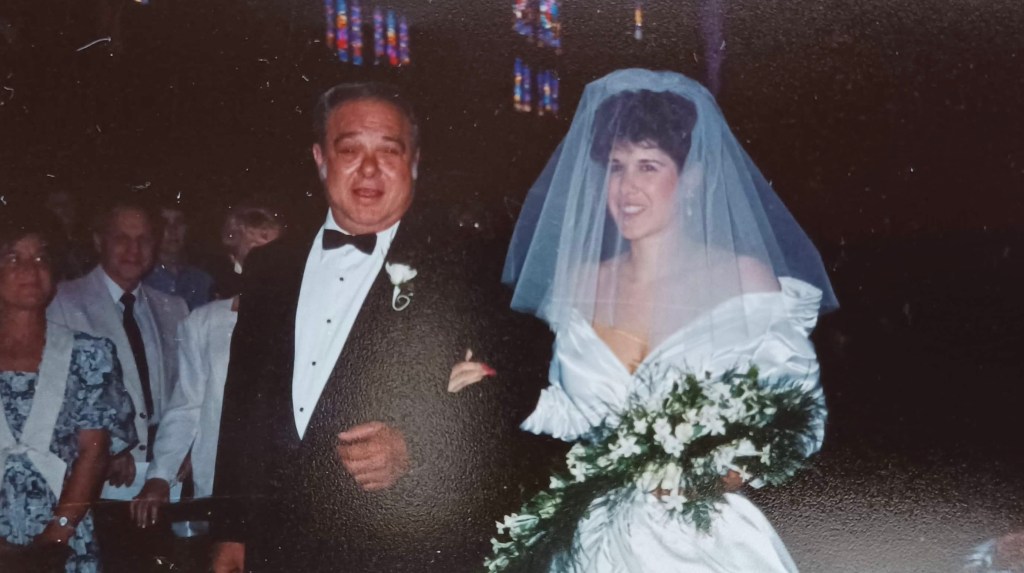
The day had finally come.
I was getting married.
Somehow, I had survived my last year of medical school while planning a wedding. I believed I had found someone different from my father — someone who could hold a job, who seemed dependable.
What I didn’t realize was that I was repeating the cycle I had lived my whole life.
He wasn’t different at all. He was emotionally unreachable, just like my father.
At that time, my parents had been divorced for years. But the dysfunction that shaped their marriage — and shaped me — was something I wouldn’t understand until much later. My mother rarely spoke of it. I grew up feeling the chaos but thinking it was normal. Love, to me, meant striving, longing, proving myself.
There were red flags before the wedding.
The biggest was during the rehearsal dinner planning.
I wanted to invite my grandmother and two dear family friends who had become like adopted grandparents.
My future mother-in-law said no.
Not because of space. Not because of money. Just… no.
No negotiation. No empathy.
I threatened not to come if they weren’t allowed.
That moment should have told me everything I needed to know.
In families where there’s emotional abuse, the circle stays small — outsiders are a threat. They might see too much.
I didn’t want my father to walk me down the aisle, but my mother said I had no choice.
I had wanted my Uncle Rocco — the one stable, loving male figure in my life — to do it.
We compromised: he and my aunt drove me to the church in their Cadillac. I remember sitting there in my dress, learning the ceremony was delayed. Uncle Rocco joked about getting a burger, ketchup dripping all over my white satin. We laughed. It was a moment of lightness, a brief glimpse of what safety and unconditional love could feel like.
The church itself was old and grand, with stained-glass windows casting jeweled light over the pews.
My bridesmaids, all in white, looked like a chorus of angels.
I floated down the aisle on my father’s arm, feeling only the tight ache of resentment, whispering for him not to step on my train.
It was symbolic, in a way: I was being led toward a life that looked beautiful from the outside but would crush me slowly from within.
At the reception — held at the local gun and bocce club, humble but dressed up with white linens, candles, and topiary trees — I waited for magic.
I had imagined dancing the night away with my new husband, being spun across the floor in laughter and joy.
We danced once. Just once.
And then he was gone — weaving his way across the room, laughing, twirling other women. Friends. Family. Strangers. Anyone but me.
He never asked me to dance again.
At the time, I told myself not to be silly. I smiled for the photographs. I sat at our sweetheart table under the dim lights, folding my hands in my lap and pretending I didn’t care. But deep down, something small and aching curled inside me — a whisper that said, You are not enough.
For years afterward, I begged him to take dance lessons with me — not for romance, just so I wouldn’t be an embarrassment at other people’s weddings.
He refused.
Until I asked for a separation.
Then, suddenly, he was willing.
But by then, the music was long gone.
And so was I.
The years that followed were a long, painful unraveling.
I carried the wreckage forward: the belief that love was conditional, that I was only valuable for what I gave, that connection was something I had to earn by being better, smaller, quieter.
The truth is, I’m not sure I ever truly showed anyone who I was.
Maybe I didn’t even know myself.
But this I know now:
Healing doesn’t come from pretending the dance was beautiful.
It comes from telling the truth about what it cost to keep smiling.
I am no longer willing to be silent.
I am no longer willing to contort myself to be worthy.
I am learning to dance again — differently this time.
Not to be chosen.
Not to be good enough.
But simply because I am.
This is the beginning of shattering my silence and reclaiming my truth.
 Finding My Rhythm: Healing, Leading, Becoming
Leave a comment